You probably know how much you pay for electricity.
You know your monthly electricity bill.
You know how much you spend on diesel or petrol.
You know when the generator needs servicing.
You know when fuel prices go up and you have to adjust your budget.
But here’s the question many business owners don’t ask:
How much is power actually costing your business?
Because your electricity bill is only one part of the story.
For many Nigerian businesses, the real cost of power is hiding in fuel, generator maintenance, downtime, equipment, lost productivity, spoiled goods and missed business opportunities.
And when you add everything together, your business may be spending far more on electricity than you realise.
The Cost of Power Is Bigger Than Your Electricity Bill
Let’s say your business receives an electricity bill of ₦200,000 a month.
It would be easy to say:
“Our power cost is ₦200,000.”
But what happens when the grid goes off?
You switch to the generator.
Now you’re buying fuel.
Then there is engine oil.
Servicing.
Repairs.
Replacement parts.
And eventually, the generator itself needs to be replaced.
Suddenly, that ₦200,000 electricity bill doesn’t tell the full story.
This is why businesses need to stop looking at electricity costs and start looking at their total energy cost.
Your Generator Has a Running Cost
Generators are useful. For many Nigerian businesses, they have become essential.
But “essential” doesn’t mean “cheap.”
Every hour your generator runs comes with a cost.
Fuel + maintenance + servicing + repairs + depreciation + manpower + downtime risk.
And the longer you depend on it, the more those costs accumulate.
This is particularly important for businesses that operate for long hours or need consistent power for equipment such as:
Refrigerators and freezers
Air conditioners
Computers and servers
Medical equipment
Pumps
Production equipment
Security systems
Internet and networking equipment
The generator may keep the lights on.
But what is it doing to your operating expenses?
Then There Is the Cost You Don’t See
This is where things get interesting.
Imagine you’re running a hotel.
Power goes off during a busy evening.
The generator doesn’t come on immediately.
A guest walks into a dark lobby.
Another guest complains that the room isn’t cooling.
Someone’s payment terminal stops working.
Your staff are trying to solve the power problem instead of serving customers.
Technically, you haven’t “lost money on electricity.”
But you may have lost productivity, customer satisfaction and revenue.
That is the hidden cost of unreliable power.
The African Development Bank estimates that electricity outages cost Nigerian businesses around 3% of annual sales.
So the question isn’t simply:
“How much did we spend on electricity?”
It is:
“How much did unreliable power cost us?”
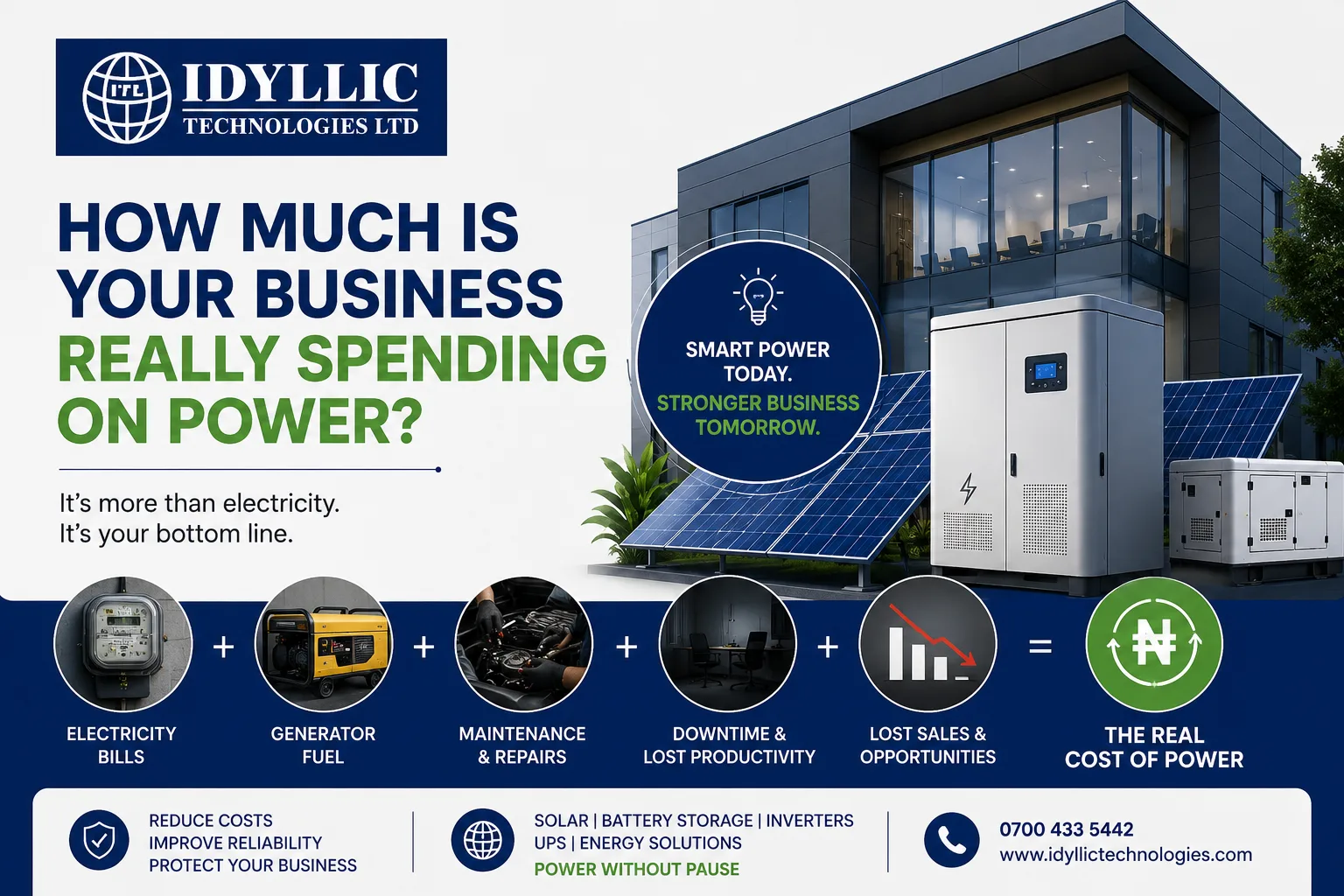
The Nigerian Business Power Equation
Your actual energy cost can look more like this:
Electricity bill
Generator fuel
Generator maintenance
Repairs
Battery/inverter replacement
Equipment damage or disruption
Lost productivity
Lost sales
Your real cost of power
And that final number can look very different from the figure on your electricity bill.
Fuel Prices Make the Problem Even More Important
Fuel is one of the biggest reasons businesses need to look beyond their electricity bill.
For businesses relying heavily on diesel generators, the cost can become significant very quickly.
Nigeria’s average retail diesel price reached about ₦3,277 per litre in May 2026, according to data reported from the National Bureau of Statistics.
Now imagine a business running a generator for several hours every day.
You’re not just buying electricity.
You’re buying fuel to create electricity.
And every increase in fuel prices can increase the cost of keeping your business operational.
So, Should You Stop Using Your Generator?
Not necessarily.
The answer isn’t as simple as:
Generator = bad.
For many businesses, generators still have an important role.
The real question is:
Does your business have the right energy mix?
Instead of relying on one source of power, businesses can combine different energy sources depending on their operations.
For example:
Grid power + solar + battery storage + generator
can provide a more flexible energy strategy than relying almost entirely on a generator.
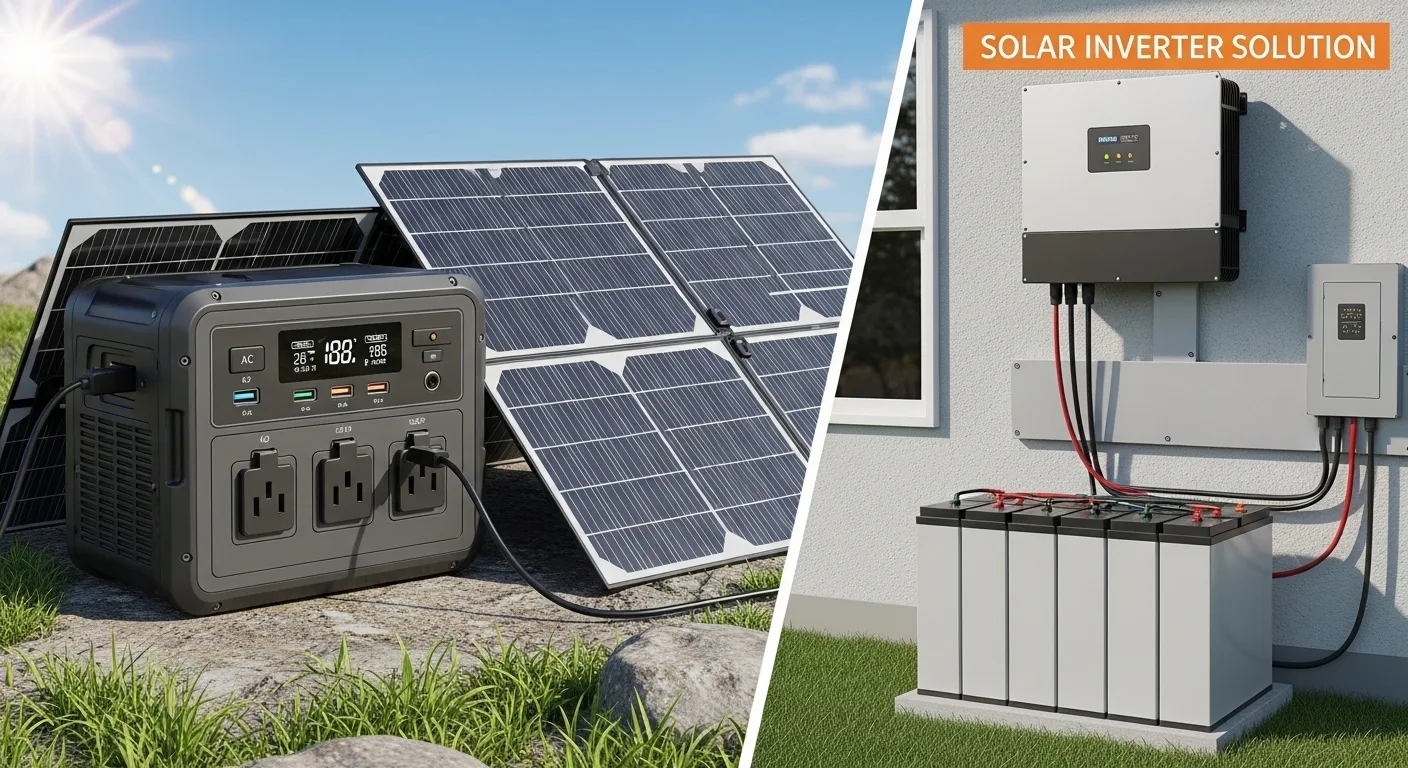
Solar panels can generate energy during the day.
A battery energy storage system can store electricity for later use.
An inverter can manage the conversion and delivery of power to connected loads.
And the generator can remain available when additional backup is required.
The objective isn’t necessarily to eliminate every generator.
It’s to reduce how often you need it and how much you spend running it.
This Is Where Battery Storage Changes the Conversation
A solar battery isn’t simply there to “keep the lights on.”
It can become part of how your business manages energy.
Instead of immediately switching to a generator whenever grid power disappears, a properly designed battery backup system can take over selected loads.
That can mean less generator runtime.
Less fuel consumption.
Less noise.
Less maintenance.
And potentially a more predictable energy budget.
But—and this is important—the battery system has to be properly sized for the business.
A battery that is too small for the actual load won’t solve the problem.
A battery that is unnecessarily oversized may increase the upfront investment without delivering proportional value.
That’s why energy assessment and load analysis matter.
Don’t Ask “How Much Does Solar Cost?”
Ask a Better Question.
One of the first questions businesses usually ask when considering solar power is:
“How much will the system cost?”
It’s an understandable question.
But it shouldn’t be the only question.
A better question is:
“How much is my current power strategy costing me every month?”
Because if you’re spending heavily on:
Diesel
Petrol
Generator servicing
Repairs
Electricity bills
Downtime
Lost productivity
then the cost of doing nothing is also a cost.
And that’s the number you need to understand before deciding whether to invest in solar panels, lithium batteries, inverters, or a complete renewable energy system.
Calculate the Cost of Keeping Your Business Running
Before making any major energy decision, start tracking your actual numbers.
For one month, record:
1. Electricity bills
How much are you paying to your electricity provider?
2. Generator fuel
How much petrol or diesel are you buying?
3. Generator maintenance
How much are servicing and repairs costing?
4. Generator operating hours
How many hours are you running it every week?
5. Downtime
How many productive hours are lost when power isn’t available?
6. Lost revenue
Are customers leaving, orders being delayed or products being spoiled because of power interruptions?
7. Equipment impact
Are sensitive electronics, refrigeration systems or other equipment being affected by unstable power?
Once you have these numbers, you can finally see your real energy expenditure.
Power Should Be an Investment, Not a Constant Emergency
For too many Nigerian businesses, energy management is reactive.
NEPA goes off → start generator.
Fuel finishes → buy fuel.
Generator develops a fault → call technician.
Fuel price increases → adjust budget.
Power goes off again → repeat.
But your business deserves a more deliberate energy strategy.
A properly designed solar power system, inverter system and battery storage solution can help businesses move from constantly reacting to power interruptions to actively managing their energy.
And that’s a very different way of thinking about power.
The Question Every Business Owner Should Ask
You don’t necessarily need to know exactly how much solar you need today.
You don’t necessarily need to buy a new inverter tomorrow.
And you certainly don’t need to replace your generator simply because someone told you solar is better.
Start with the numbers.
How much are you spending to keep your business powered?
And more importantly:
How much could you save if your business needed less fuel, experienced less downtime and had a more efficient energy system?
Because the cheapest-looking power solution isn’t always the cheapest one.
Sometimes, the real cost is the cost you haven’t calculated yet.
Power Without Pause Starts With Understanding Your Energy
At Idyllic Technologies, we help businesses assess their energy needs and explore suitable solar power, inverter, lithium battery, UPS and backup power solutions designed around their actual operations.
Because reliable power isn’t simply about having electricity.
It’s about having the right energy strategy for your business.
Power Without Pause Starts Here.