Business growth is usually a good thing.
More customers. More orders. More staff. More equipment. Longer working hours.
But sometimes, growth brings a problem you did not expect.
A business owner adds a new machine because demand has increased. Then another. The team gets bigger, the office gets busier, and operating hours are extended. Before long, the power system that once handled everything comfortably is being pushed to its limit.
Suddenly, the questions start coming.
Can we run all this equipment at the same time?
Will the battery last long enough?
What happens when the grid goes off?
Can we add more equipment without upgrading the system?
This is where many businesses discover that the power system they installed for yesterday’s business may not be ready for tomorrow’s business.
So here is the question every growing business should ask:
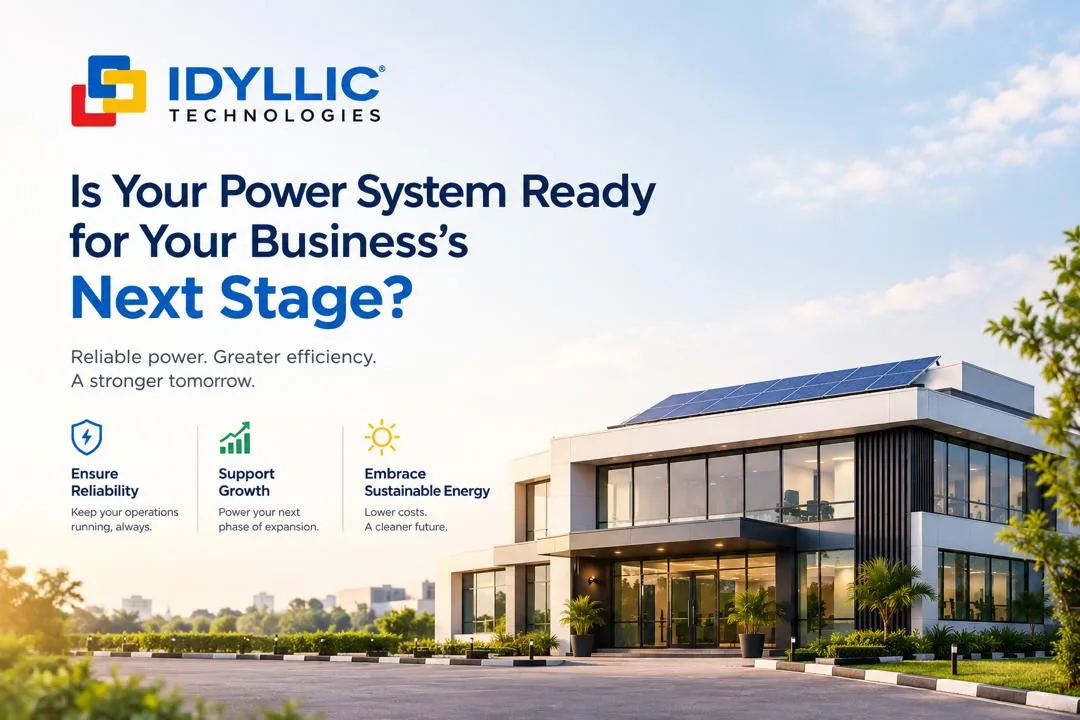
Is your power system ready for your business’s next stage?
The answer is worth thinking about before growth forces you to find out the hard way.
Business Growth Usually Means Higher Energy Demand
When a business grows, electricity demand often grows with it.
A small office with five employees may only need a few computers, air conditioners, lights, printers and other basic equipment.
But what happens when that office grows to 20 employees?
There are more computers. More people may need cooling. There may be additional workstations, equipment and longer operating hours.
The same thing happens across different industries.
A restaurant that increases its customer base may need more refrigeration, freezers, kitchen equipment and lighting.
A hotel that adds more rooms will have more air conditioners, water pumps, lighting and other electrical loads.
A manufacturing business that increases production may add new machines that consume significant amounts of power.
A supermarket that expands its operations may need additional freezers, refrigerators, lighting and security systems.
The business has grown, and its power needs have grown with it.
That is why planning a solar power system based only on what your business needs today may not always be the best approach.
The Question Is Not Just “How Much Power Do I Need?”
When businesses start considering solar, one of the first questions is usually:
“What size solar system do we need?”
That is an important question.
But there is another question that should come before it:
“What does our business need its power system to do?”
These are two very different questions.
A business may currently need a 20kW system.
But if the business plans to add more equipment, increase production, extend operating hours or move into a larger facility, its energy requirements could change.
That does not necessarily mean the business should install a much larger system immediately.
It means those plans should be considered when designing the solution.
The goal is to avoid buying a system that becomes unsuitable shortly after installation.
Think About Where Your Business Is Going
You do not need to predict exactly where your business will be five or ten years from now.
But you probably have an idea of what the next few years could look like.
Ask yourself a few simple questions.
Are you planning to increase production?
Are you planning to add more employees?
Will you be purchasing new machines or equipment?
Are you planning to extend your operating hours?
Are you moving to a larger office or facility?
Are you opening another branch?
Will your current equipment remain the same, or are you expecting your energy demand to increase?
These questions can make a big difference when planning a business solar system.
For example, consider a bakery that currently operates with two ovens.
Business is going well, so the owner plans to purchase another oven and increase daily production.
The bakery may also need another freezer and refrigerator and may decide to operate for longer hours.
Those changes will affect the business’s energy demand.
If the solar system was designed without considering these plans, the business could eventually find itself needing more capacity than the system was originally designed to provide.
Your Power System Should Support Growth
A power system should not become a limitation to business growth.
Imagine that your business receives a large new contract.
It is excellent news.
But fulfilling the contract means running your machines for longer hours and adding another piece of equipment.
If your existing power system is already operating close to its limit, that new opportunity can create a power problem.
Now you are asking questions such as:
Can we run this equipment?
Can we operate for longer?
Will the battery last?
Can everything run at the same time?
Do we need another backup source?
These are not just technical questions.
They can affect your ability to serve customers and deliver on business commitments.
This is why your energy strategy should grow alongside your business strategy.
Solar Is More Than Panels on a Roof
When people hear the word solar, they often think about solar panels.
But a business solar system involves much more than panels.
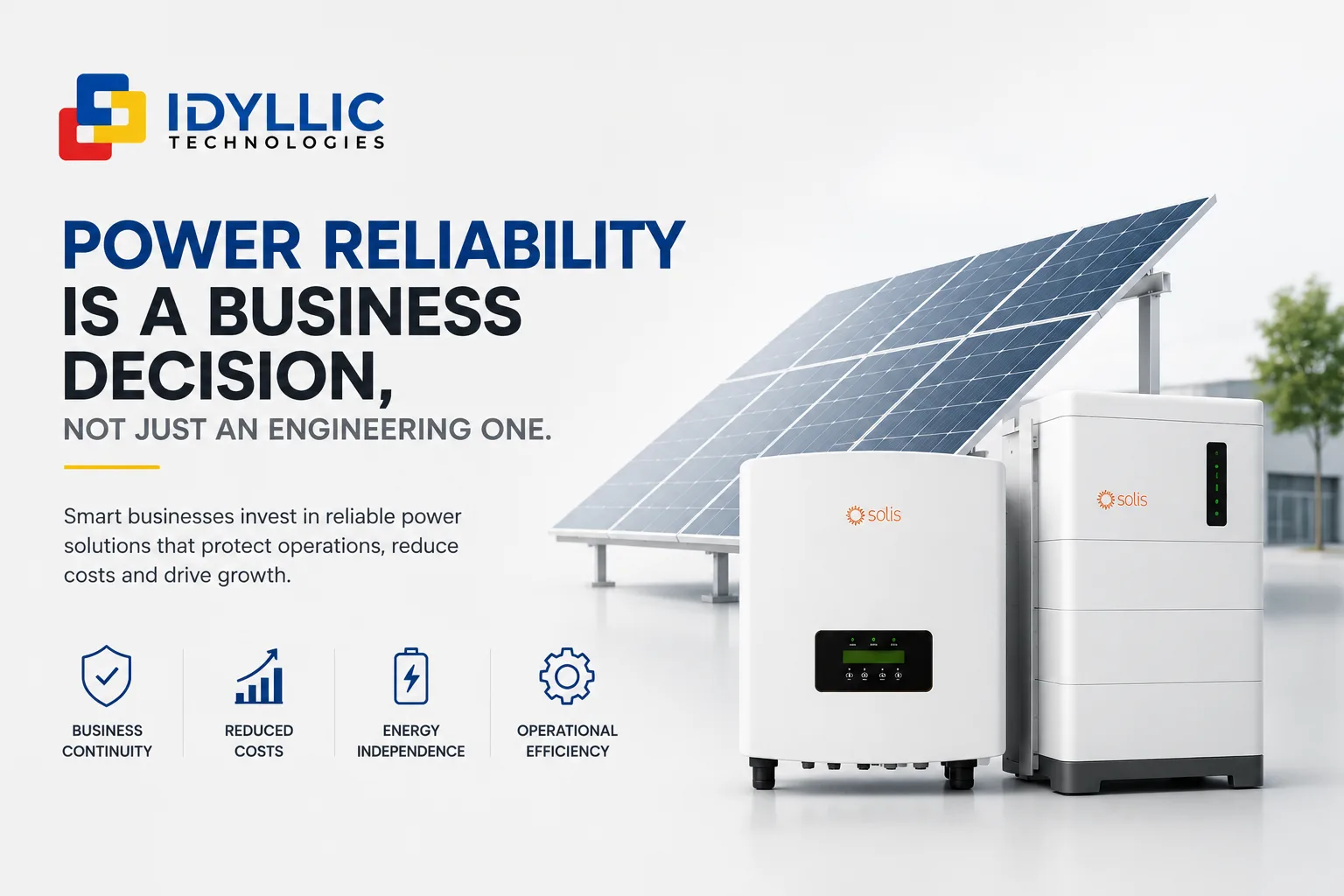
Solar panels generate electricity from sunlight.
The inverter manages and converts that energy so it can be used by your business.
Battery storage can store energy for use when solar generation is unavailable or when backup power is required.
The system also needs to be designed around your business’s actual electrical loads and operating patterns.
For example, a business that operates mainly during the day may make significant use of solar energy as it is generated.
Another business may have important loads that continue into the evening.
In that case, battery storage can become an important part of the solution.
This is why choosing equipment should come after understanding how the business uses power.
What Happens When a Business Outgrows Its Power System?
A business does not always realise immediately that its power system has become too small.
Sometimes the signs appear gradually.
You may notice that more equipment cannot run at the same time.
Your batteries may discharge faster than they used to.
Your backup power may not last as long.
You may have to switch certain equipment off to keep other equipment running.
You may find yourself relying more heavily on other power sources.
You may even start thinking twice before purchasing new equipment because you are unsure whether your existing power system can handle it.
At that point, the power system is no longer simply supporting the business.
It is starting to influence business decisions.
That is something proper planning can help prevent.
Why a Power Assessment Matters Before Solar
One of the most important steps before investing in solar is understanding how your business actually uses electricity.
Your electricity bill alone may not tell the whole story.
Two businesses can have similar electricity bills but very different energy requirements.
One may use most of its power during the day.
Another may use significant power at night.
One may have several large machines.
Another may have many smaller loads operating throughout the day.
A proper power assessment helps provide a clearer picture.
It can help identify your important electrical loads, how much power they require, when they operate and how your business’s energy demand may change as the business grows.
This information can then be used to develop a solar and battery solution that is better suited to the business.
Instead of simply asking, “How many panels do we need?” you are asking a much more useful question:
“What power solution will allow this business to operate reliably?”
Consider What Needs to Stay On
Not every electrical load in a business has the same level of importance.
Some equipment can be switched off during a power interruption without causing serious problems.
Other equipment cannot.
For a cold storage business, refrigeration may be critical.
For a manufacturing company, certain machines may need to remain operational.
For an office, computers, internet equipment and security systems may be important.
For a hotel, lighting, refrigeration, water pumps and other essential services may need continuous support.
Understanding these priorities is important when designing your power system.
It helps determine where available solar and battery capacity should be focused.
You Do Not Have to Oversize Your System
Planning for growth does not mean installing the biggest solar system you can afford.
That can create its own problems.
You may end up paying for capacity that you do not need for years.
The smarter approach is to understand your current requirements and your realistic growth plans.
If you know that you will be adding equipment next year, that matters.
If you expect your workforce to grow, that matters.
If you are planning to expand your facility, that matters.
If you are considering another branch, that matters too.
The goal is to design a solution that makes sense for your business today while considering where you are realistically heading.
Think Beyond the Next Power Outage
For many Nigerian businesses, the conversation around power often starts with the next outage.
How long will the grid be available?
How much will the generator consume?
How long can the business continue operating?
Those are important questions.
But there is a bigger conversation to have.
What should your business’s power system look like as the business grows?
How can you reduce dependence on unreliable power?
How can you protect important operations?
How can you manage energy costs?
How can you make sure your power infrastructure does not become a barrier to expansion?
Solar, battery storage and intelligent energy management can be part of that conversation.
The right solution depends on the business.
Before You Invest in Solar, Ask These Questions
Before choosing a solar system for your business, take a step back and ask:
What equipment do we currently depend on?
Which loads are most important?
When does our business use the most electricity?
How much power do we need during the day?
How much power do we need at night?
What equipment are we planning to add?
Are we expecting production to increase?
Are we planning to expand our facility?
Could our operating hours increase?
How important is backup power to our operations?
Can the proposed system be expanded if our needs change?
These questions can help you have a much more productive conversation with a solar provider.
You should also be able to understand why a particular system has been recommended.
You should not have to be an engineer to understand an investment that will become an important part of your business infrastructure.
Your Business May Look Different in Two Years
The business you are running today may not be the business you are running two years from now.
You may have more customers.
More employees.
More equipment.
More locations.
More production.
More operating hours.
That is growth.
And growth changes your power requirements.
So before investing in a solar system, do not only ask what your business needs today.
Ask what you reasonably expect your business to need as it grows.
Because the best power solution is not simply one that works when everything stays the same.
It is one that gives your business room to move forward.
Is Your Power System Ready for Your Next Stage of Growth?
At Idyllic Technologies, we believe that business solar solutions should begin with understanding the business.
Your current energy needs matter.
Your critical equipment matters.
Your operating hours matter.
Your future plans matter too.
Whether you are looking to reduce your dependence on unreliable grid power, improve business continuity, manage energy costs or prepare for expansion, the right solution starts with understanding what your business actually needs.
Is your power system ready for your business’s next stage?
If you are not sure, now may be the right time to find out.
Talk to Idyllic Technologies about assessing your business’s power needs and exploring a solar and battery solution designed around your business.
Your business is growing. Your power system should be ready for it.