For many businesses, electricity is treated as an operational necessity.
Keep the lights on.
Keep the computers running.
Keep the machines working.
Keep the internet connected.
But reliable power is more than an engineering requirement.
It is a business decision.
When electricity becomes unreliable, the impact can extend far beyond an office going dark. Employees may lose productive hours. Customers may experience delays. Refrigerated products may be at risk. Production schedules can be interrupted. Businesses may spend more on generators and fuel. And when these disruptions happen repeatedly, the cumulative cost can become significant.
This is why businesses should think about power reliability as part of their overall business strategy, not simply as an electrical infrastructure problem.
For organisations operating in Nigeria, where businesses may need to manage grid interruptions alongside generators and other backup options, building a more resilient energy system can be an important part of protecting daily operations.
And this is where renewable energy, solar power, battery storage and intelligent backup power solutions can play a role.
What Happens When Your Business Loses Power?
The obvious answer is simple:
Operations stop.
But the real impact can be much broader.
A power interruption can affect several areas of a business simultaneously.
1. Productivity
Employees cannot always work effectively when essential systems are unavailable.
Consider a typical office.
Employees may depend on:
Computers
Internet connectivity
Servers
Printers
Communication systems
Lighting
Air conditioning
Security systems
When power goes out, productivity can decline even if the interruption lasts for a relatively short period.
And the cost is not necessarily limited to the duration of the outage.
Employees may need additional time to restart systems, recover files, reconnect to applications and return to normal workflows.
Repeated interruptions can therefore create a cycle of lost productive time.
2. Revenue
For many businesses, the relationship between electricity and revenue is direct.
A restaurant without refrigeration or kitchen equipment cannot operate normally.
A supermarket experiencing refrigeration problems may face product losses.
A manufacturing facility may be unable to complete production.
A hotel may struggle to provide the level of service customers expect.
An online business may lose transactions when its systems or internet infrastructure go offline.
The important question is therefore not simply:
“How much does electricity cost?”
It is:
“How much does unreliable electricity cost my business?”
That is a much more strategic question.
3. Operations
Modern businesses depend on electricity across almost every part of their operation.
Power can affect:
Production
Inventory management
Point-of-sale systems
Communications
Security
Refrigeration
Water pumping
IT infrastructure
Manufacturing equipment
Customer service
Administration
When one part of the energy infrastructure fails, other processes can quickly be affected.
This is why business continuity and energy reliability should be considered together.
A business continuity strategy should not only ask:
“What happens if our internet goes down?”
It should also ask:
“What happens if our electricity supply is interrupted?”
The Hidden Cost of Unreliable Power
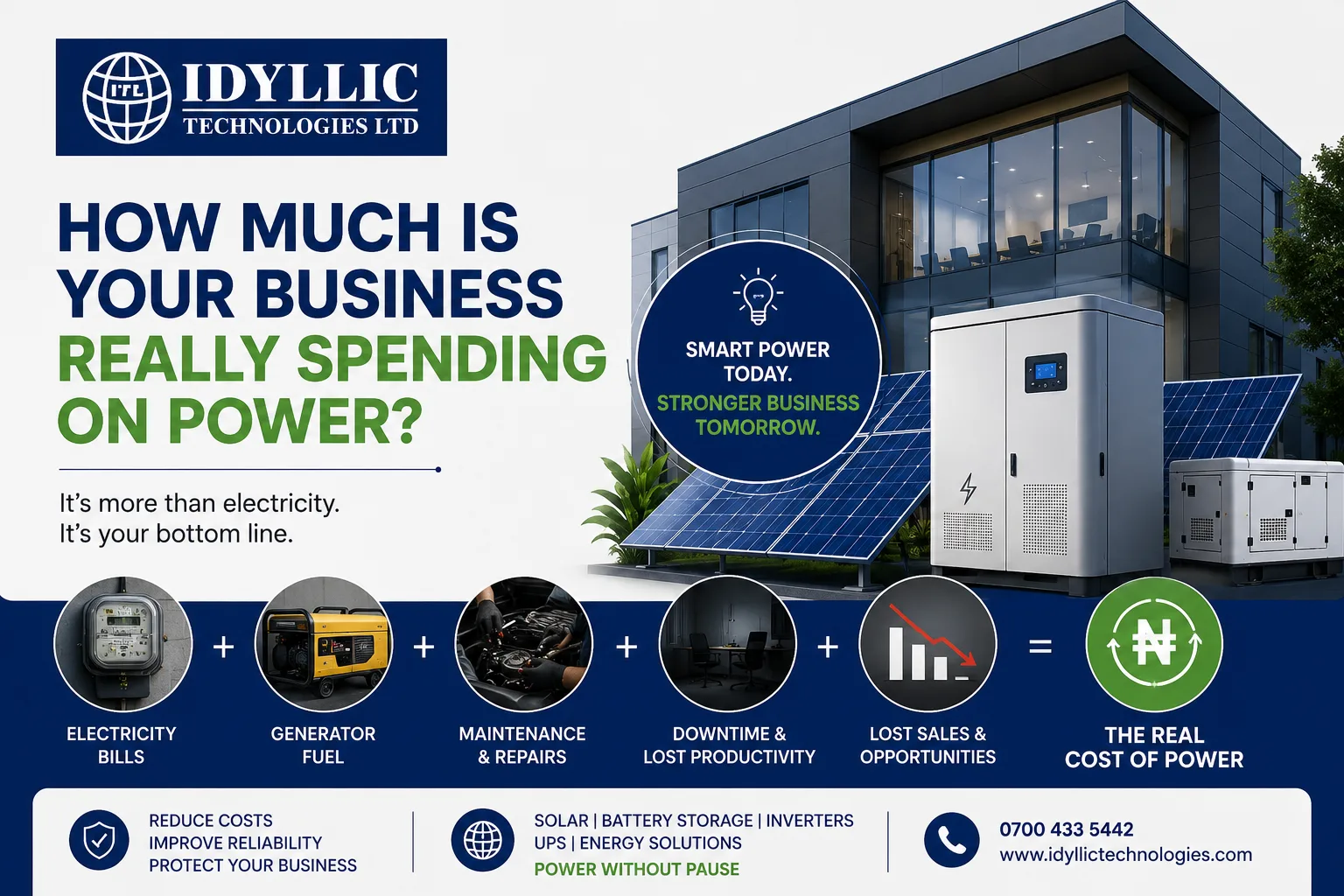
One of the biggest mistakes businesses make is measuring the cost of electricity only by their utility bill or generator fuel expenses.
The true cost can include much more.
Direct costs
These may include:
Generator fuel
Generator maintenance
Repairs
Grid electricity
Backup equipment
Equipment servicing
Indirect costs
These may include:
Lost working hours
Production delays
Missed sales
Customer dissatisfaction
Spoiled inventory
Interrupted services
Delayed deliveries
Equipment downtime
This means a business could be spending money on electricity without fully understanding the economic cost of unreliable power.
Generator Backup Helps — But Is It the Whole Solution?
Generators remain an important backup option for many businesses.
They can provide electricity when grid power is unavailable and, when appropriately sized and maintained, can support significant loads.
However, depending entirely on generators can create its own challenges.
Fuel costs can fluctuate.
Generators require maintenance.
They produce noise and emissions.
They require regular servicing.
And businesses may still experience interruptions when a generator cannot start, requires repairs or runs out of fuel.
This is why many businesses are looking beyond a single backup source and considering a broader hybrid energy strategy.
Solar + Battery Storage: A Different Approach to Business Power
A modern commercial energy system can combine several sources of electricity.
For example:
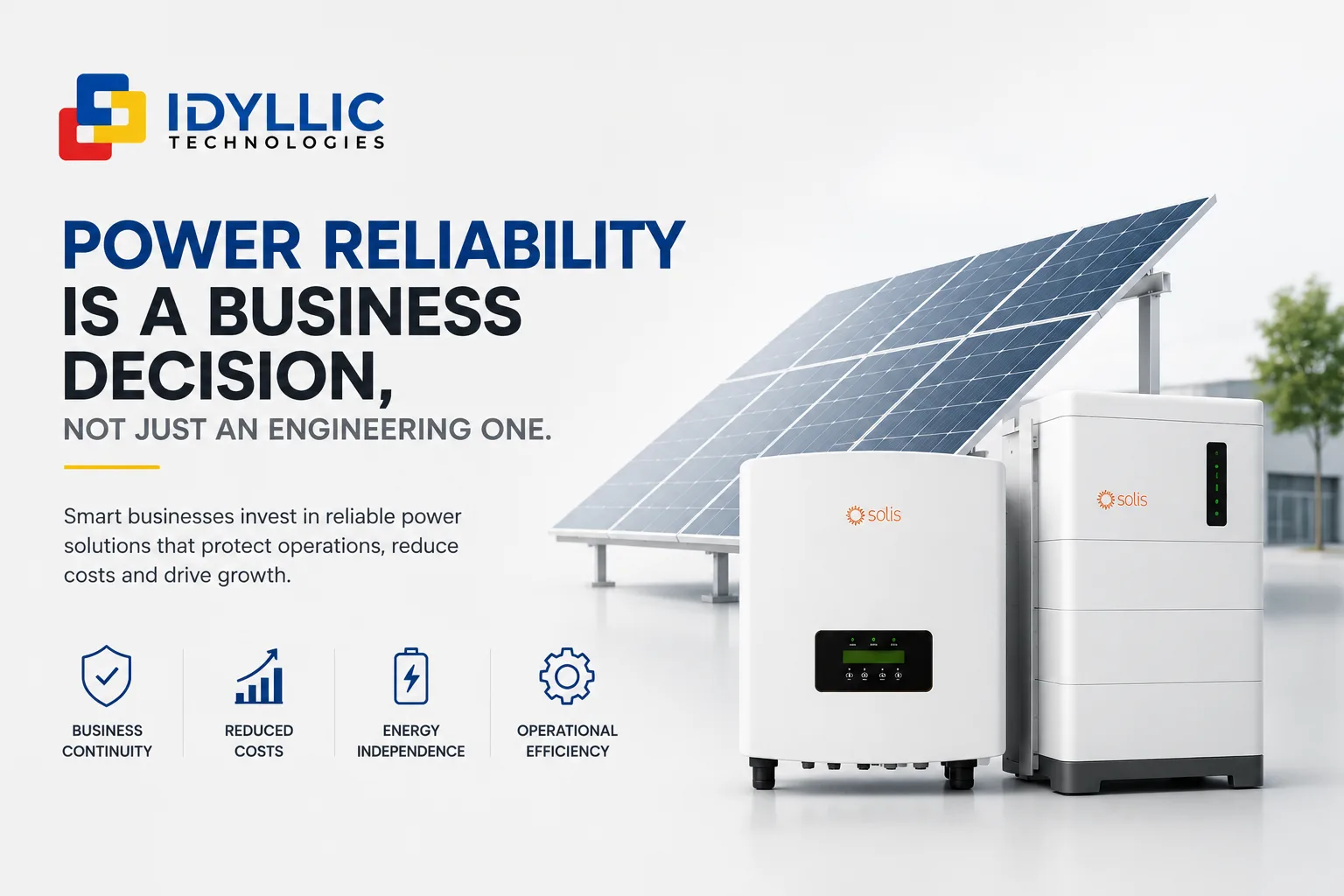
Solar + Battery + Grid + Generator
Each source can serve a different purpose.
Solar energy
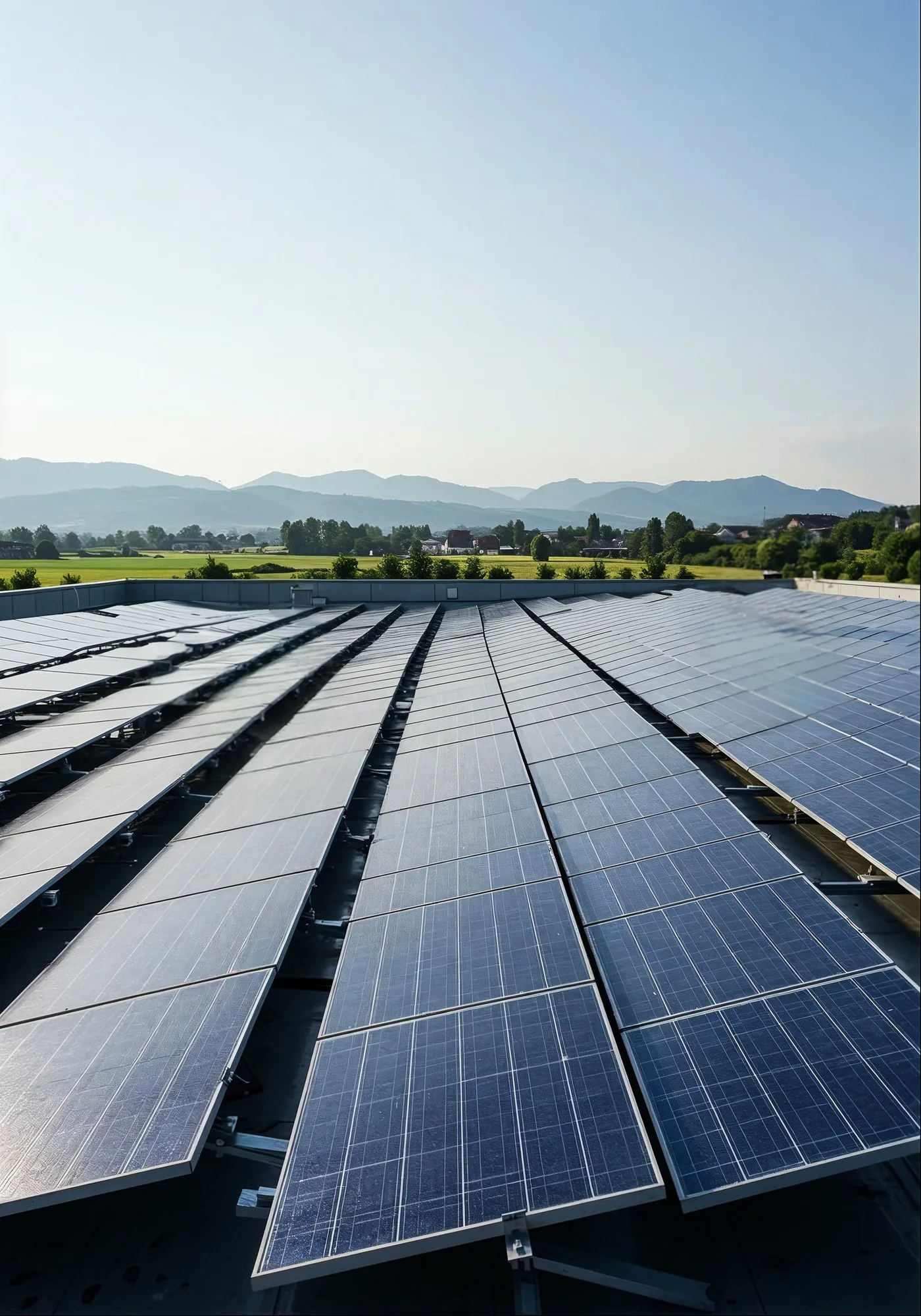
Solar panels generate electricity during daylight hours, potentially reducing dependence on grid electricity and generator power.
Battery storage
A battery energy storage system stores electrical energy for use when solar generation is low or when another power source is unavailable, depending on the system configuration.
Grid power
The grid can remain part of the overall energy mix where available.
Generator
An existing generator can potentially serve as another backup source rather than being the business’s only source of backup electricity.
This type of hybrid solar system can provide businesses with more flexibility in managing their energy.
Power Reliability Can Protect Productivity
Imagine a business where employees rely on computers, internet connectivity and cloud-based applications.
A power interruption occurs.
Without backup power, work stops.
With an appropriately designed solar and battery backup system, critical equipment can continue operating.
The difference is not simply electrical.
It is operational.
Employees can continue working.
Customers can continue receiving service.
Communication systems can remain active.
Business processes can continue.
This is why backup power is ultimately a business productivity tool.
Power Reliability Can Protect Revenue
Consider a business that processes customer transactions throughout the day.
If the business cannot operate during power interruptions, every hour of downtime may represent missed commercial opportunities.
Now consider a business that depends on refrigeration.
A prolonged interruption could affect inventory.
Or consider a production facility.
An unexpected shutdown can interrupt manufacturing schedules and create delays.
The exact financial impact differs from business to business, but the principle remains:
When electricity supports revenue-generating activities, power reliability becomes a financial consideration.
Power Reliability Can Improve Operational Planning
Reliable power also makes it easier for businesses to plan.
When energy availability is unpredictable, management may need to constantly adjust operations around power interruptions.
Businesses may need to:
Schedule production around electricity availability
Start generators
Monitor fuel levels
Reschedule work
Manage equipment shutdowns
Deal with unexpected downtime
A more reliable energy system can reduce some of this operational uncertainty.
This is particularly valuable for businesses where consistency matters.
Energy Should Be Managed as a Business Asset
Businesses carefully manage their:
People
Technology
Vehicles
Buildings
Inventory
Cash flow
Energy infrastructure deserves the same level of strategic thinking.
Your power system directly supports the assets that generate revenue.
That means decisions around solar panels, solar inverters, batteries, generators and energy storage should not be made solely on equipment specifications.
They should be connected to the business’s objectives.
For example:
What equipment must never go offline?
How many hours of backup do we need?
What is our peak electricity demand?
How much energy do we consume each day?
How much generator fuel are we currently using?
What would one hour of operational downtime cost us?
These are business questions.
The Right Solar System Starts With the Business, Not the Equipment
One of the most common mistakes when investing in solar is starting with a product.
A business owner may ask:
“Should I buy a 10kW inverter or a 20kW inverter?”
But that should not necessarily be the first question.
Instead, start with:
What are you powering?
List the equipment and appliances that your business depends on.
What is your peak demand?
Determine how much power your business may require when multiple loads operate simultaneously.
How much energy do you consume?
Look at your daily and monthly energy requirements.
What needs backup?
Not every load necessarily needs to remain operational during an outage.
How long should backup last?
One hour of backup is very different from eight hours.
What is your future energy requirement?
If your business is growing, today’s energy consumption may not represent tomorrow’s needs.
Only after answering these questions should you begin selecting the appropriate solar inverter, battery storage, solar PV capacity and backup configuration.
Critical Loads vs Non-Critical Loads
One of the smartest ways to design a commercial backup power system is to identify your critical loads.
These are the systems that directly affect your business’s ability to operate.
For example:
Critical
Servers
Computers
Internet equipment
CCTV
Security systems
Refrigeration
Essential lighting
Point-of-sale systems
Important
Air conditioning
Water pumps
Additional lighting
Office appliances
Non-critical or high-energy loads
Heavy machinery
Large heating equipment
Some industrial equipment
Other loads that can be scheduled
By prioritising critical loads, businesses can potentially create a more efficient backup power solution without attempting to provide unlimited backup capacity for every appliance.
Solar Is Not Just About Saving on Fuel
When businesses evaluate solar energy, the conversation often focuses on reducing electricity bills or generator fuel consumption.
Those are important considerations.
But the value of commercial solar power can extend further.
A well-designed renewable energy system can help a business pursue:
Greater energy reliability
Reduced generator dependence
Improved operational continuity
Better energy management
Reduced exposure to fuel costs
More predictable power availability
Greater resilience during outages
The financial value will vary depending on the business, energy consumption, system size, equipment costs and operating conditions.
But the strategic value of reliable power can be just as important.
Why This Matters for Businesses in Nigeria
For Nigerian businesses, electricity is often a particularly important operational consideration.
Businesses may have to manage multiple sources of electricity, including grid power, generators and renewable energy.
Rather than viewing these sources as competing technologies, businesses can consider how they work together.
A hybrid energy solution can combine solar generation, battery storage, grid electricity and generator backup according to the business’s requirements.
The objective is not necessarily to eliminate every existing power source.
The objective is to build a more reliable and efficient energy strategy.
How Idyllic Technologies Approaches Business Power Reliability
At Idyllic Technologies, we believe commercial energy decisions should start with understanding the business.
As a renewable energy and backup solutions company, our focus is not simply on supplying equipment.
We help businesses consider the complete energy picture.
That can include:
Solar power systems
Solar inverters
Hybrid solar inverters
Battery energy storage
Lithium battery systems
Commercial backup power
Generator integration
Energy management
Solar system design
Commercial solar installation
The right solution depends on the business.
An office may need a different configuration from a hotel.
A supermarket may have different requirements from a manufacturing facility.
A clinic may prioritise reliability for critical equipment.
A growing business may also need a system that can expand as its energy demand increases.
That is why energy assessment and proper system design matter.
The Business Case for Power Reliability
The question is no longer simply:
“How can we keep the lights on?”
The better question is:
“How does our energy strategy protect our business?”
Reliable power can support:
Productivity
Employees can spend more time working and less time dealing with interruptions.
Revenue
Businesses can reduce the operational disruptions that may prevent them from serving customers.
Operations
Critical systems and processes can remain available when they are needed.
Customer experience
Reliable operations can help businesses deliver more consistent service.
Business continuity
A resilient energy strategy can help businesses prepare for power interruptions.
Cost management
Solar and battery solutions may help reduce reliance on generators and other costly energy sources, depending on the application.
Power Reliability Is an Investment in Business Continuity
Electricity should not be viewed simply as another monthly expense.
For many businesses, it is infrastructure.
When that infrastructure is unreliable, the consequences can reach every part of the organisation.
That is why power reliability is a business decision—not just an engineering one.
The right energy strategy should consider your operations, productivity, revenue, equipment, employees and future growth.
Whether that means a commercial solar system, hybrid solar inverter, battery energy storage system, generator integration, or a complete renewable energy and backup power solution, the starting point should always be the same:
Understand what your business needs to keep running.
Then design the energy system around it.
Need a More Reliable Power Solution for Your Business?
If unreliable electricity is affecting your business operations, productivity or costs, it may be time to rethink your energy strategy.
Idyllic Technologies provides renewable energy and backup power solutions designed around the needs of homes, businesses and commercial facilities.
From solar inverters and battery storage to commercial solar systems and hybrid backup solutions, we can help you explore a power solution built around your actual energy requirements.
Power Without Pause Starts Here.
Idyllic Technologies
Renewable Energy & Backup Solutions