Power is easy to think about as another business expense.
There is the electricity bill. The fuel bill. The cost of running backup systems. The maintenance that comes with keeping everything powered.
But what happens when the power is not available when your business needs it?
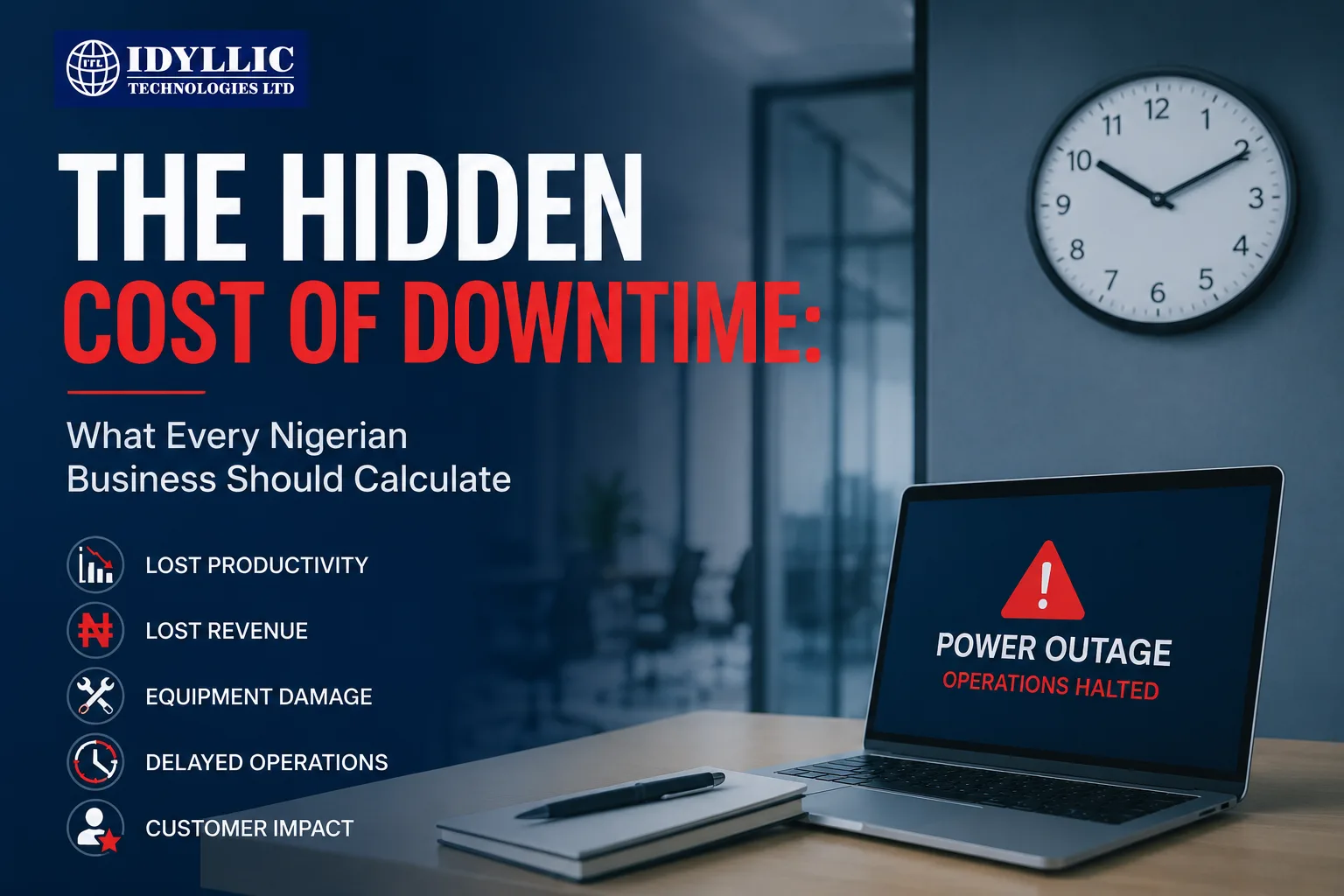
It is 11 a.m. Your office is busy. Employees are working on important tasks, customers are being attended to, orders are being processed, and the day is moving as planned.
Then the power goes out.
A computer shuts down. A transaction is interrupted. A production machine stops. A customer is left waiting. Employees pause what they are doing while someone tries to restore power.
The electricity has gone off, but the business has not stopped needing to operate.
That is where the real cost of unreliable power begins.
The question business owners should be asking is not simply, “How much are we spending on power?”
It is:
“What is unreliable power actually costing our business?”
The Cost of Power Goes Beyond the Electricity Bill
Every business expects to spend money on power. Electricity is part of running an office, hotel, hospital, retail store, factory, school or any other commercial operation.
The problem begins when the cost of unreliable power starts appearing in places other than the electricity budget.
Think about a retail store that loses power during its busiest period.
If payment systems go down, customers may not be able to complete their purchases. If refrigeration is interrupted, certain products may be at risk. Employees are still being paid, but part of that working time may be spent waiting for operations to resume.
Now consider a manufacturing business.
A power interruption can stop machinery in the middle of production. Orders may be delayed. Production schedules can shift. Materials may be wasted. Employees may have to wait for equipment to restart before work can continue.
For a hotel, unreliable power can affect air conditioning, lighting, water systems, kitchen operations and other services guests expect to work without interruption.
For a school, it can disrupt digital learning, administration, examinations and other essential activities.
For an office or SME, a power interruption can mean lost working hours, disrupted meetings, unavailable systems and missed deadlines.
The electricity bill does not necessarily show any of these costs.
That is the important distinction.
You can budget for power and still pay a much higher price for unreliable power.
Paying for Power vs. Paying the Cost of Unreliable Power
There is a difference between paying for electricity and paying for the consequences of electricity interruptions.
The first is an expected operating cost.
The second can become an operational problem.
A business may lose an hour of productivity, but that hour does not simply disappear from the clock. Employees still need to be paid. Customers still need to be served. Deadlines still exist. Orders still need to be completed.
Sometimes the work simply gets pushed into the next hour.
Sometimes it gets pushed into the next day.
And sometimes the opportunity is gone completely.
A customer who walked away because a transaction could not be completed may not come back. A delayed delivery may affect a relationship with a client. A production delay may affect several other activities that depend on that output.
This is why power should not be viewed only through the amount appearing on a monthly bill.
It should also be viewed through what that power enables the business to do.
Power Is Part of Your Business Operations
Every business has activities that depend on electricity.
The question is how critical those activities are.
A bank or office may depend on computers, networking equipment, servers, security systems and communication infrastructure.
A hotel may depend on cooling systems, lighting, water systems, kitchen equipment and guest facilities.
A hospital has critical equipment and services that require dependable power.
A manufacturing company may depend on machinery running according to a carefully planned production schedule.
A supermarket may rely on refrigeration, lighting, point-of-sale systems and other equipment throughout the day.
These businesses are different, but they have something in common: power is connected to how they deliver their service.
That makes power an operational decision, not simply a budget item.
Before deciding how much backup power a business needs, it is worth asking what must continue running when the grid is unavailable.
Which equipment is critical?
How much power does it require?
How long does it need to remain operational?
What happens if it stops?
And what happens when the business grows and its power requirements increase?
These questions are often more useful than simply asking, “What size inverter should we buy?”
The Right Power Solution Starts With the Business
There is no single power solution that works for every business.
An office with relatively predictable loads may have different requirements from a manufacturing facility. A hotel will have different priorities from a retail store. A hospital will have different critical loads from an SME.
This is where proper power planning matters.
Solar can help businesses generate their own electricity and reduce dependence on grid supply. Battery storage can store energy for use when it is needed. Inverters can convert and manage that energy for the loads being powered. UPS systems can provide immediate backup and protection for sensitive equipment.
Hybrid systems can combine different sources of power to support business operations according to their specific requirements.
But the technology itself is only part of the conversation.
The bigger question is whether the system has been designed around the way the business actually operates.
A system that looks adequate on paper may not be adequate once all the important loads are considered. Similarly, a business may spend more than necessary if its system is designed without understanding which equipment truly needs continuous backup.
That is why power assessment matters.
The goal is not simply to install more equipment.
The goal is to build a power arrangement that makes sense for the business.
Reliable Power Should Support the Way You Work
Think about what reliable power allows a business to do.
Employees can continue working.
Customers can continue being served.
Equipment can continue operating.
Orders can continue moving.
Meetings can continue.
Production can continue.
Services can continue.
That is the real value of reliable power.
It is not simply about keeping lights on.
It is about protecting the activities that keep the business moving.
This does not mean that every business needs the largest battery, the biggest inverter or a complete solar system.
It means the power solution should be appropriate for the business’s actual requirements.
For some businesses, that may mean protecting only critical loads.
For others, it may mean a combination of solar, battery storage, inverter technology and other backup systems designed to support a wider range of operations.
The right question is therefore not, “What equipment should we buy?”
It is:
“What does our business need power to do?”
That question leads to a much more useful conversation.
What Is Unreliable Power Actually Costing Your Business?
The cost of unreliable power is not always obvious.
It can sit quietly inside lost working hours, delayed orders, interrupted transactions, equipment downtime, missed deadlines and frustrated customers.
That is why looking only at the electricity bill can give a business an incomplete picture of its true power costs.
Your business does not simply consume electricity.
It uses power to produce, serve, communicate, sell, protect equipment, meet deadlines and generate revenue.
And when power becomes unreliable, all of those activities can be affected.
A good power strategy therefore begins with understanding the business itself: what it does, what equipment it depends on, which operations are critical and what level of continuity it requires.
At Idyllic Technologies, we believe power solutions should be built around those realities.
If you are unsure whether your current power setup is actually supporting your operations, it may be time to assess it from a business perspective.
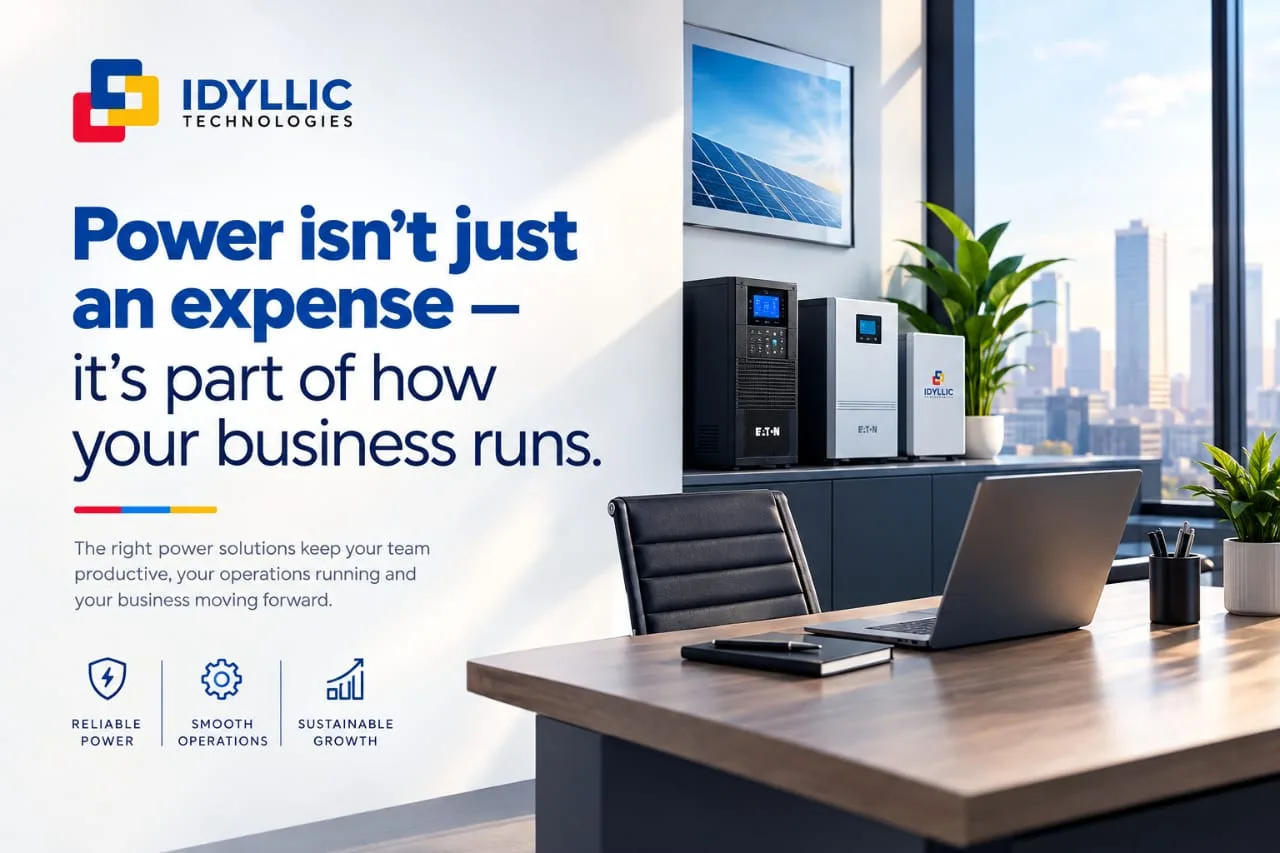
Because power is not just an expense. It is part of how your business runs.
Talk to Idyllic Technologies about assessing your business power requirements and finding a solution designed around the way you operate.